
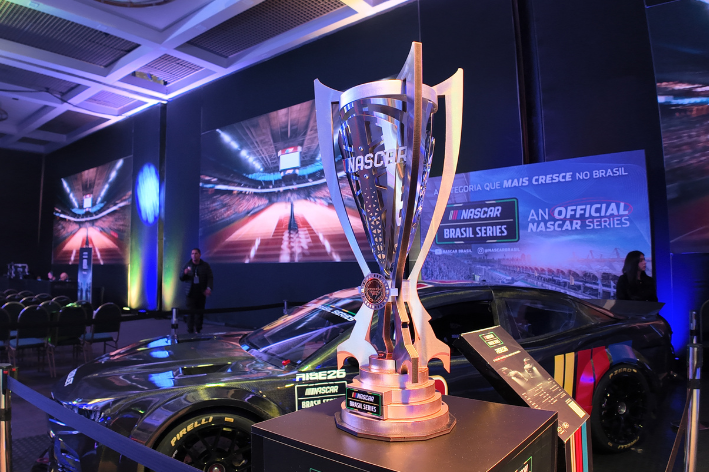
An immersive room for events offers companies a way to surprise their audience and turn corporate content into more engaging experiences. With the evolution of audiovisual technologies, organizers can explore formats that go beyond traditional presentations, using images, sounds and sensory stimuli to bring participants closer to the message.
When planning the 2027 calendar, it is worth considering how these resources can help create more dynamic gatherings. After all, in a constantly changing landscape, capturing the audience’s attention requires creativity and relevant proposals.
In this context, immersive environments stand out by turning the space itself into part of the event’s narrative.
What is an immersive room?
An immersive room combines different technological resources to create an integrated audiovisual and sensory experience.
Possibilities include 360-degree projections, soundtracks, custom lighting, scenography and narrative content developed especially for the event.
In addition, depending on the structure and the concept, the environment can incorporate physical effects such as scents, stage fog, wind jets and rain simulations. These elements help create different atmospheres and increase participant engagement.
The setup can use projectors, LED panels and integrated audio systems. However, the choice of equipment should take into account the event’s objective, the characteristics of the space and the technical needs of each project.
More than impressing visually, an immersive room for events needs to communicate a clear and relevant message.
How to use immersive experiences in corporate events?
The versatility of these environments allows for different applications. As a result, the experience can take on specific roles within the program.
Product launches
At launches, an immersive room makes it possible to present products through audiovisual narratives that highlight their features, functionalities and differentiators.
This way, participants can get to know the brand’s proposal in an environment that combines information and visual stimuli.
In addition, the presentation can incorporate animations, demonstrations and customized content to reinforce the main benefits of the launch.
Conventions and leadership meetings
At corporate conventions, immersive technology can help present results, goals and strategies in a more dynamic way.
For example, data and indicators can be given visual representations that make them easier to understand and put the organization’s objectives into context.
Consequently, the experience can help strengthen alignment between leaders and teams, making communication more engaging.
Brand activations
Activations also find new possibilities in immersive environments.
With images, sounds and visual elements aligned with the company’s identity, it is possible to create spaces that encourage interaction and content creation.
In addition, these environments can serve as highlights during trade shows, conferences and networking events.
In this way, the brand expands its opportunities to connect with participants.
Training and skills development
Another application is corporate training.
The use of audiovisual resources makes it possible to present processes, situations and concepts through simulations and visual narratives.
This way, participants can understand certain content in a more contextualized manner.
However, it is important to remember that technology should complement the learning methodology, not replace the clarity of the information.
Planning and technology must go hand in hand
To develop an immersive experience, the first step is to define the objective of the activity.
Next, organizers should assess the audience profile, the length of the presentation, the resources required and how it integrates with the other moments of the program.
In addition, aspects such as acoustics, lighting, circulation and accessibility must be part of the planning.
It is also essential to consider participants’ comfort. Intense lighting effects, loud sounds or specific sensory stimuli may require alternatives for people with different needs.
Therefore, a well-planned experience should balance innovation, communication and inclusion.
Versatile spaces expand the possibilities
The immersive room for events shows how the choice of venue can directly influence the design of a corporate program.
Depending on the concept, the event can combine sensory presentations, plenary sessions, workshops, exhibition areas and networking moments.
At WTC Events Center, the variety of spaces and configuration options make it possible to explore different corporate event formats, taking into account the technical and operational needs of each project.
In addition, the integration between spaces makes it easier to create programs that combine content, relationship building and interactive experiences.
Thus, when planning their 2027 events, companies can explore new ways to present their messages and engage participants.
More than using technology, the goal is to create experiences that make sense to the audience and strengthen brand communication.
Discover the spaces at WTC Events Center and explore the possibilities to transform your next corporate event.