
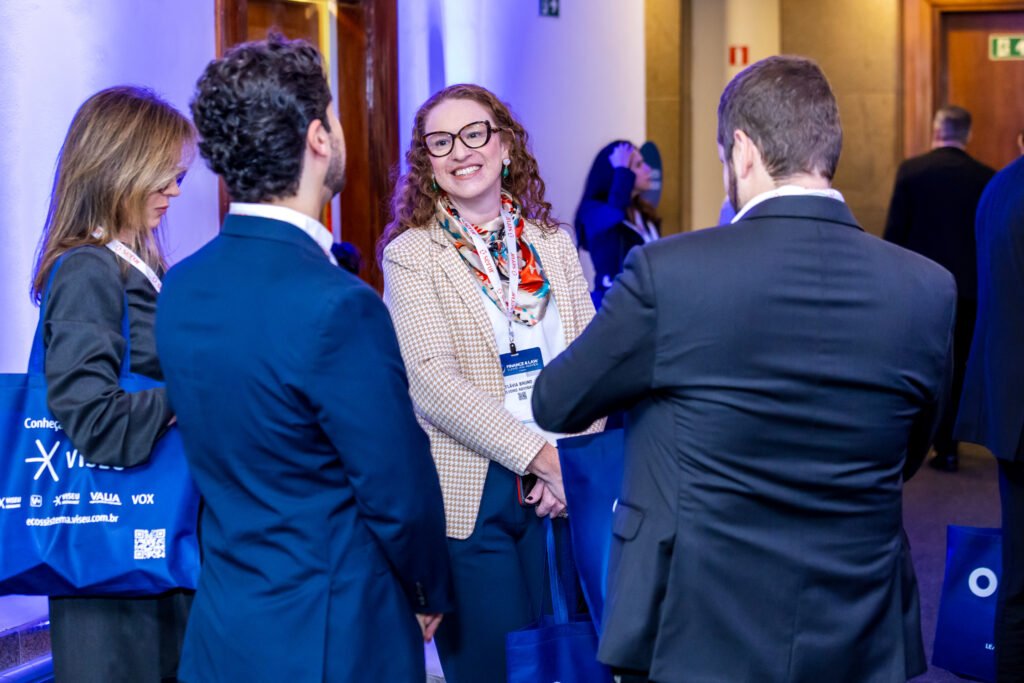
Events for different generations require planning that goes far beyond the program itself. Today, it is common for the same gathering to bring together professionals from the Baby Boomer, Generation X, Millennial and Generation Z groups. Although they all share the same space, each group has different habits, expectations and ways of interacting. Therefore, understanding these characteristics is essential to creating more inclusive and relevant experiences.
Rather than serving one specific profile, the challenge is to develop an event that offers comfort, convenience and opportunities for connection to every participant.
Communication for different profiles
Communication is one of the first aspects that deserves attention.
While younger participants often prefer quick, digital information that is accessible through smartphones, many professionals from previous generations value physical signage, support materials and in person guidance.
Therefore, combining different communication channels allows everyone to find the information they need easily. As a result, the experience becomes more accessible and efficient for audiences with different profiles.
Flexible spaces improve the experience
In addition to communication, the configuration of the environments also directly influences the participant experience.
Modern events require spaces that can accommodate different moments within the program. Comfortable rooms for presentations, dedicated networking areas, meeting environments and spaces for breaks help support different forms of participation.
Consequently, participants find more opportunities to learn, interact and build relationships throughout the event.
Technology that simplifies the journey
Technology should make the experience easier, never more difficult.
Resources such as digital registration, event applications, interactive signage and audiovisual solutions help make the participant journey more efficient. However, these resources must be intuitive and supported by teams prepared to provide assistance whenever necessary.
In this way, innovation becomes a tool for inclusion, allowing participants from different generations to use available resources with confidence.
Programming and gastronomy make a difference
Another important factor is the diversity of the program.
Traditional presentations remain relevant, but they can be complemented by panels, discussions, workshops and interactive activities. This balance supports different learning styles and keeps the audience more engaged throughout the event.
In addition, gastronomy also contributes to a more welcoming experience. Varied menus, options for different dietary restrictions and comfortable environments for meals and conversations make the event more inclusive and enjoyable for everyone.
The experience should serve every generation
Creating events for different generations does not mean developing separate programs for each audience. On the contrary, it means building an experience capable of welcoming different profiles through intelligent choices in communication, infrastructure, technology and services.
At WTC Events Center, this flexibility is part of the operation. With versatile spaces, integrated infrastructure and solutions for events in different formats, environments, technologies and experiences can be adapted to the needs of varied audiences.
After all, regardless of generation, every participant expects a well organized, relevant and memorable event. When every detail is designed with people in mind, the experience becomes more efficient, welcoming and capable of creating connections that continue long after the program ends.