
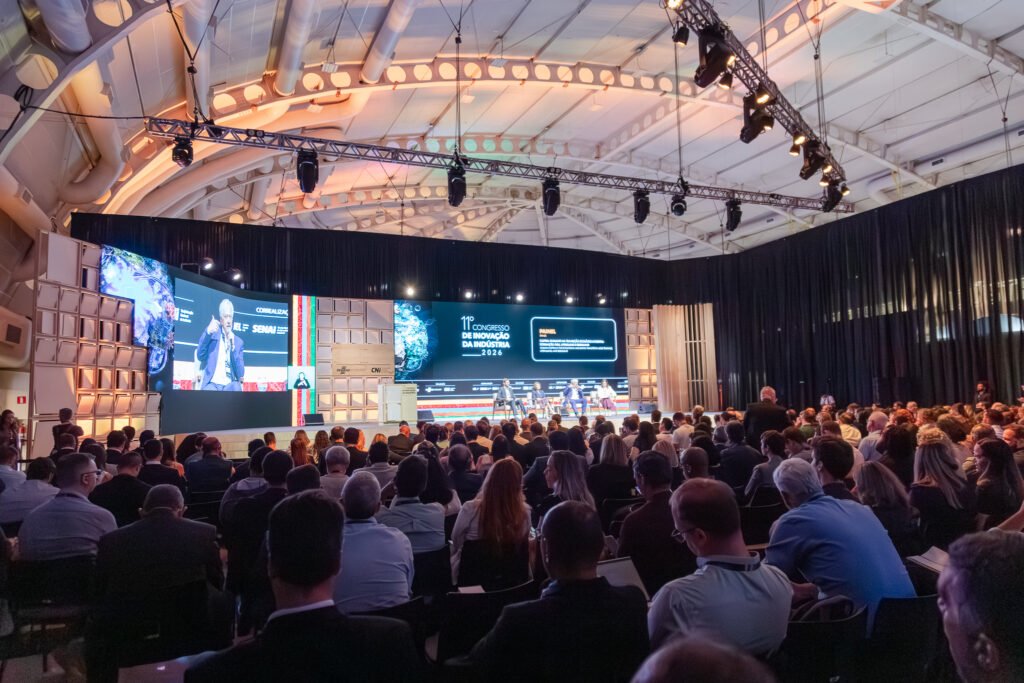
How to create a truly sustainable event is a question that is becoming increasingly common among companies and event organizers. After all, sustainability is no longer merely a competitive advantage. It has become part of the expectations of participants, partners and the market.
Even so, sustainable events are still often associated only with reducing paper use or replacing disposable materials. Although these initiatives are important, they represent only one part of a much broader process. In practice, a sustainable event begins with planning and considers its environmental, social and operational impacts at every stage.
Sustainability begins with planning
The decisions made before the event setup even begins have a major influence on its impacts.
For this reason, choosing a venue with a strategic location, complete infrastructure and easy access helps reduce travel, optimize resources and make the entire operation more efficient. Likewise, concentrating services in a single location simplifies logistics and reduces the need for transportation between different suppliers.
In addition, correctly planning room capacity, the quantity of materials and food service requirements helps prevent waste and promotes more responsible resource management.
Reduce waste without compromising the experience
Sustainability does not mean giving up quality. On the contrary, well planned events can deliver an excellent experience while using resources more intelligently.
In this context, solutions such as digital registration, electronic signage, reusable materials and more efficient processes help reduce waste and improve event organization.
In food service, for example, properly planning the menu and quantities helps minimize waste without compromising the quality of the service provided to participants.
Therefore, small choices made throughout the process can generate significant benefits for both the event and the environment.
Choose committed partners
Another essential aspect is supplier selection.
The sustainability of an event depends on the joint efforts of the entire chain involved in its delivery. For this reason, working with partners who adopt good environmental practices, use resources responsibly and invest in more efficient processes strengthens the results of the project.
More than simply hiring services, it is important to build relationships with companies that share the same values and goals.
Consider the legacy of the event
A truly sustainable event does not end when the last participant leaves the venue.
In addition to reducing impacts during its execution, it creates positive contributions for companies, participants and communities. Sharing knowledge, encouraging good practices and strengthening connections are also part of this legacy.
In this sense, sustainability involves responsibility, innovation and a long term vision.
At WTC Events Center, we believe that major events can combine operational efficiency, innovation and responsibility. With versatile spaces, integrated operations and specialized partners, we help companies develop projects that balance performance, experience and a commitment to a more sustainable future.
After all, how to create a truly sustainable event is no longer merely a trend. Today, it is an essential strategy for organizations that want to deliver more efficient, responsible events that are prepared for the challenges of the future.